
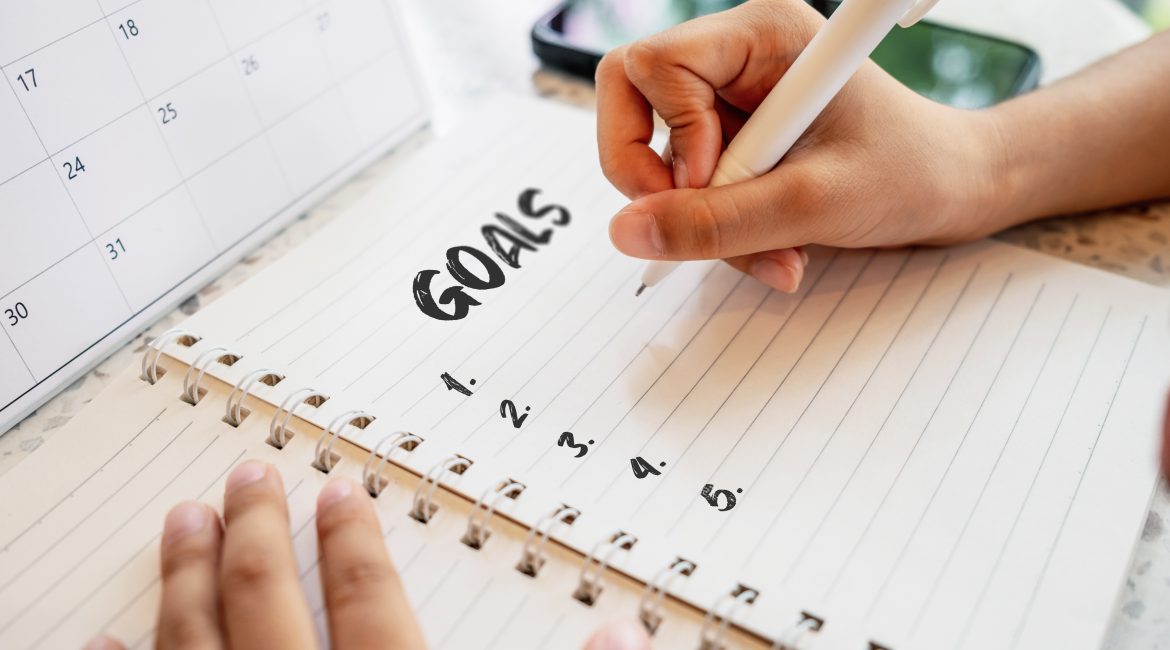

The year is just getting started, are you? We unpack the simple goal setting hacks you need to succeed.
We’re sure you’re a bit tired of hearing about New Year’s Resolutions. Or maybe a “bit” doesn’t begin to cover it.
Read this: 10 Tips for Making Meaningful New Year’s Resolutions You Can Stick To
The clock strikes 12 and suddenly everybody is better. They’ve instantly upgraded into somebody who doesn’t drink Coke, has chucked out the microwave and is training to climb Kilimanjaro.
It just seems like New Year can trick people into thinking they’ve met a goal before they have. Is making a decision about what you’re going to start or quit a big part of meeting your goals? Absolutely. But does it guarantee your resolution will last? Nope.
Why is goal setting important?
Oftentimes, we are goal setting without consciously realising it. Before going out, we have a goal to have a great time. When we wake up in the morning, we have a goal of finding matching socks and racing our kids off to school.

These goals are functional things: what do I have to do to meet the requirement of this day or circumstance.
Discover: 5 Brain Boosting Foods to Fuel Your Busy Days
Bigger goals, however, can’t be achieved in one day. A lot of the time, a big goal isn’t going to be achieved in a year. When we set big, lifetime goals for ourselves we’re mapping out what we envision for ourselves. It helps us to inform all the smaller decisions we make in our day to day, the ones that build up to achieving our bigger goals for the year ahead.
And here’s the important part: goal setting can keep you grounded when life feels chaotic. They give you something to return to, even when your motivation dips. When you know what matters to you, it becomes easier to say “yes” to the right things and “no” to the distractions that drain you.
So how do you go about building life-long habits that lead to your greater goals? That’s a great question, and we have a few answers to share.
Check this out: Get healthy in 2026 with Oneplan
4 ways to make sure your goals last
-
Take it day by day
We’ve briefly touched on how small steps take you towards the final destination.
Your goals will need to fit into each and every day within your small 24-hour window. Let’s say your goal is to grow an investment portfolio that buys you a property in the Eastern Cape.
Now, that goal isn’t going to happen within the next five to ten years. You’re putting your money in for the long haul. Well, you’re going to have to scatter short term goals within your long-term goal.
For example, you have to start learning about investing. When goal setting during this period, it might sound something like, “listen to (a reputable investing podcast) for 30 minutes a day” or “finish x amounts of investing books in two months”. These day-to-day goals get you to the next step, where your goals may be broken down into, “invest 5% of monthly income into x stock every month” and so on.
Moving day by day keeps you in the present and focused on doing the proper groundwork it takes to meet your long-term goals.
If you ever feel overwhelmed by how far you still have to go, zoom in. Ask yourself: what is one small action I can take today that points me in the right direction? Small actions are powerful because they build momentum, and momentum builds belief.
Explore: How to increase your serotonin levels & 5 benefits
-
Hold yourself accountable
When people think of being held accountable, they make the mistake of thinking that means everybody and their uncle has to know about their big life changes. That way, if you fall off the wagon, you have people to prod you with sticks.
Except, nobody knows you the way you know yourself – even if you don’t know yourself very well yet. In our eyes, the best way to keep an eye on your progress is to be accountable to yourself.
A few ways to be honest with yourself is to set aside time to reflect at the end of each day or week to see if you did what you intended to do. You can see where you met your goals and what you can try again in the morning or the following week.
Rituals like journaling, meditation and honest self-reflection are all a part of keeping your goals on track.
If you want to make accountability easier, make it visible. Put a habit tracker on your fridge, set a daily reminder on your phone, or keep a simple checklist in your notes app. The less you have to rely on memory or willpower, the better.
-
Give yourself grace
You’re going to fail.
You’re going to fail and it’s going to suck, a lot. But failure doesn’t mean your goals are unattainable. You may fail to go to the gym for a week, that doesn’t mean you’ve failed on getting stronger. You may have failed and shared a cigarette with a coworker, that doesn’t mean you have to do the same thing tomorrow.
Although the journey towards your goal may be hard, it doesn’t need to be hard labour. Give yourself a break and watch how much better you do.
Grace is also practical. It looks like adjusting your goal when your capacity changes, and choosing consistency over perfection. Missing a day is normal. Letting one missed day turn into “I’ve ruined everything” is what trips people up.
Explore: Self-care this Valentine’s Day: will you be your Valentine?
-
Let them go
Honestly, life isn’t always going to go according to your plan. You can vision board, journal and manifest all you want, but some events in our lives are set in stone and we don’t see them coming until they come.
You’re allowed to change your mind halfway (changing your mind is different from giving up). You’re allowed to say “things are different now, I am different now, and I don’t want to go in this direction anymore”.
It’s tough. It may even be tougher than getting to your goals in the first place. But the bravest thing you can do to make sure you have goals that last is to let them go when it’s time.
Sometimes the goal doesn’t fail, it just evolves. Maybe you realise you want a different career path. Maybe the fitness routine you chose doesn’t suit your body anymore. Maybe you need a season of rest. Letting go and re-evaluating your goal setting can be a sign that you’re listening to yourself, not that you’re giving up.
Yours in excellent health insurance,