
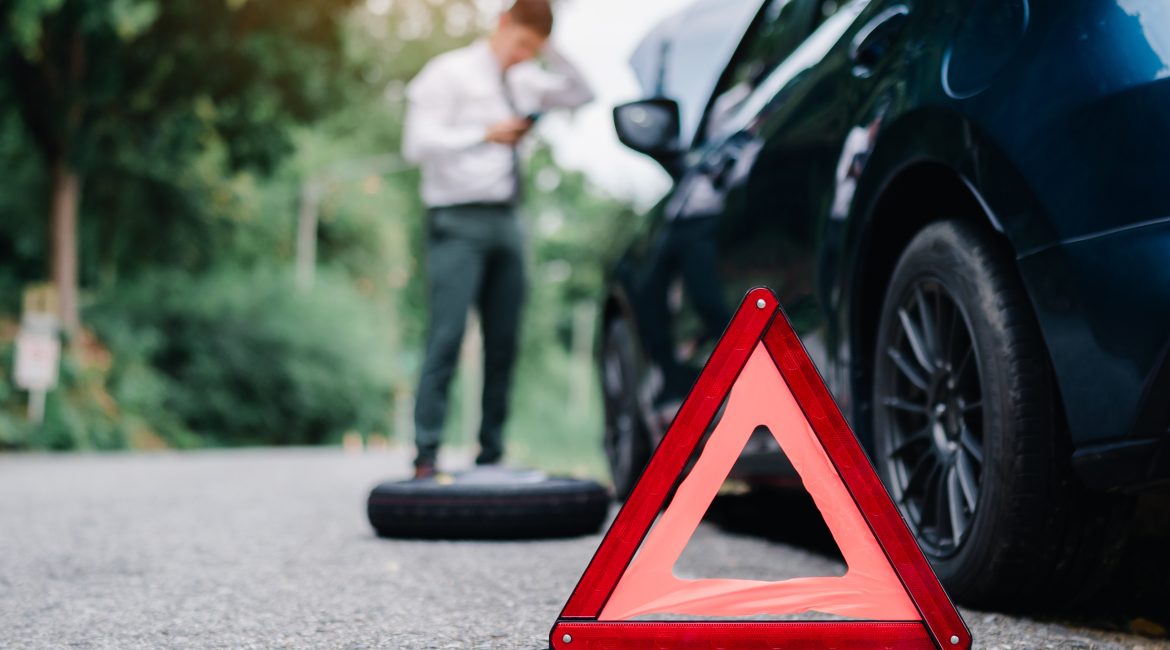

You can check your mirrors, follow the speed limit and keep a safe following distance, but some things on the road can still catch you completely off guard.
A tyre blows. Your engine suddenly loses power. A stone hits your windscreen. Or you press the brake pedal and something doesn’t feel right.
Car emergencies can happen quickly, and knowing what to do before you find yourself in one can help you respond more calmly and safely.
Here’s what to do if you experience some common car emergencies on South African roads.
What to do if your engine loses power
An engine can lose power or cut out for several reasons, from mechanical or electrical problems to running out of fuel.
Whatever the cause, your first priority is getting yourself and your vehicle out of danger.

If your engine loses power while you’re driving:
- Stay calm and keep a firm grip on the steering wheel.
- Switch on your hazard lights to warn other road users.
- Avoid sudden steering or braking where possible.
- Use the vehicle’s remaining momentum to move towards a safe place away from moving traffic.
- Be aware that steering or braking may feel different if the engine has switched off.
- Once you are safely stopped, don’t attempt repairs if doing so puts you near moving traffic.
- Contact roadside assistance or your emergency assistance provider.
If you have to stop next to the road, the AA recommends pulling as far onto the shoulder as possible before getting out of the vehicle.
What to do if your windscreen cracks or shatters
A flying stone or piece of road debris can turn an ordinary drive into one of those car emergencies you weren’t expecting.
A small chip may not seem serious at first, but windscreen damage can spread and affect your visibility. The AA recommends checking windscreen damage regularly because a small chip can develop into a larger crack and become a safety concern.
If your windscreen is badly cracked or shattered while you’re driving:
- Stay calm and avoid sudden movements.
- Slow down gradually.
- Switch on your hazard lights if necessary.
- Move to a safe place away from traffic as soon as you can.
- Avoid touching or trying to remove broken glass yourself.
- Don’t continue driving if the damage affects your ability to see the road safely.
- Contact roadside assistance or arrange for professional help.
When it comes to car emergencies, windscreen damage shouldn’t be ignored. Your windscreen is an important part of your vehicle’s safety, so serious damage shouldn’t be something you leave for another day.
Car emergencies and what to do if a tyre blows
That sudden bang is enough to make anyone jump.
A tyre blowout can cause your vehicle to pull to one side, but reacting too aggressively can make it harder to control.
If a tyre blows while you’re driving:
- Keep both hands firmly on the steering wheel.
- Try to keep the vehicle travelling in a straight line.
- Avoid slamming on the brakes.
- Ease off the accelerator and allow the vehicle to slow down gradually.
- Move off the road when it is safe to do so.
- Switch on your hazard lights.
Once you’re safely out of traffic, assess the situation.
Only attempt to change the tyre yourself if you have the correct equipment and can do so somewhere safe. If you’re next to a busy road, in an unsafe area or simply aren’t comfortable changing it yourself, call for roadside assistance.
Regular tyre checks can also help reduce your risk on the road. The AA recommends regularly checking tyre condition and tread, including your spare tyre, and replacing damaged or worn tyres when necessary.
Discover the essentials you need for you car emrgency kit.
What to do if your brakes fail
Brake problems are one of the car emergencies that need immediate attention.
If a brake warning light appears or your brakes suddenly feel different, have your vehicle professionally inspected as soon as possible.
If you lose braking ability while driving:
- Stay calm and keep control of the steering wheel.
- Take your foot off the accelerator.
- Switch on your hazard lights.
- Try the brake pedal again to see whether any braking pressure remains.
- If you drive a manual vehicle, change down through the gears gradually to help reduce your speed.
- Look for a safe place to move away from traffic.
- Avoid switching off the engine while the vehicle is still moving.
- Once the vehicle has stopped safely, call for assistance and don’t continue driving.
Of all the car emergencies you could experience, brake failure can be particularly dangerous. Your brakes are one of your vehicle’s most important safety systems, so if something feels wrong, don’t wait for complete brake failure before having them checked.
A little preparation can go a long way
You can’t always prevent car emergencies, but looking after your vehicle can reduce the chance of some problems catching you by surprise.
Make a habit of checking your tyres, brakes, lights, windscreen, wipers and fluid levels. The AA also recommends keeping your phone charged and having emergency contact numbers available when you travel.
And don’t forget your spare tyre. It won’t be much help when you need it if it’s flat too.
Learn how to do wound care and scar prevention.
Be ready when the unexpected happens
Even careful drivers can have bad luck on the road.
Knowing how to respond to common car emergencies can help you make safer decisions when every second suddenly feels much faster than usual.
It also helps to know what support you have before you need it.
With Oneplan Car and Household Insurance, you can choose cover designed to help protect you and your car when the unexpected happens.*
From accidents to other qualifying insured events, having the right cover in place means you don’t have to figure everything out after something has already gone wrong.
Because you may not be able to predict what happens between A and B, but you can be better prepared for it.
Explore Oneplan Car and Household Insurance and find cover that fits your needs.
Your Insurance Family,